The Responsibility of Engineering in the Age of AI
Capability may attract attention. Engineering is what earns trust.
By Hamdullah Noori
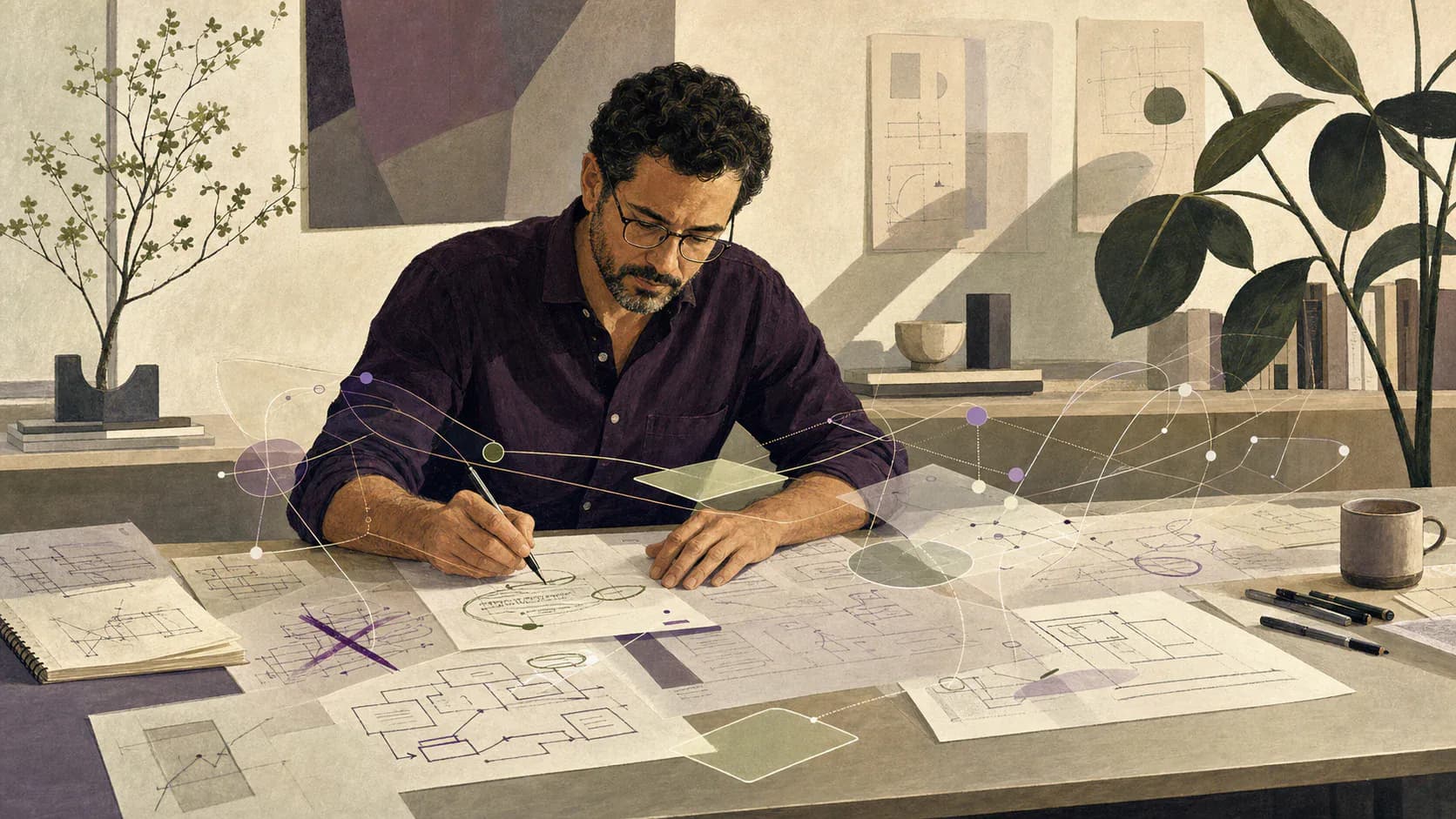
Every generation inherits technologies that change the way people work, but only a few change the way organizations think. The internet redefined communication by making information widely and immediately accessible. Cloud computing transformed software from something businesses installed and periodically replaced into something they could continuously develop, deploy, and improve. Mobile devices then blurred the boundary between physical and digital experiences, making software a constant part of everyday life rather than a destination reached from a desk.
What distinguishes the current moment is not simply the pace of innovation, remarkable as it has been, but the breadth of the technology's influence. Within a few years, AI has moved from research environments and limited experiments into products and workflows used across software development, customer service, healthcare administration, financial analysis, and education. Engineers use it to navigate unfamiliar codebases and explore possible implementations. Researchers use it to organize and synthesize large volumes of information. Service teams use it to summarize conversations and prepare responses, while hospitals and financial institutions evaluate where it can reduce administrative burden or assist with complex analysis.
These applications help explain why adoption has accelerated. Modern systems can reduce repetitive work, shorten the time required to analyze information, and help professionals identify patterns or possibilities that might otherwise be difficult to see. Their value does not depend on replacing every part of a process. In many cases, it comes from improving how time, expertise, and attention are applied. For businesses under pressure to move faster without sacrificing quality, that is already enough to make AI a practical operational tool rather than a speculative investment.
The first phase of adoption was largely defined by assistance. Systems helped people draft documents, summarize information, search internal knowledge, and generate software. That model is now expanding. Companies are beginning to evaluate agents that retrieve information from several sources, interact with internal applications, and carry out sequences of tasks with less direct instruction. The technology is moving beyond isolated productivity features and closer to the processes through which institutions serve customers, manage risk, and make decisions.
That transition creates meaningful opportunities, but it also changes what responsible deployment requires. When a system drafts an internal note, the consequences of an error may be modest and easily corrected. When the same underlying technology participates in software delivery, clinical documentation, compliance analysis, or financial operations, its output may influence decisions with much greater consequences. At that point, speed and capability remain important, but they are no longer sufficient measures of quality.
The discussion surrounding enterprise AI is beginning to reflect this reality. Attention that once centered almost entirely on model performance and benchmark results has broadened toward the disciplines required to deploy intelligent systems responsibly: evaluation, governance, security, and operational accountability. It is a consequence of becoming useful enough to move closer to the core of how institutions operate.
As that happens, engineering teams must address questions that conventional software does not always present in the same form. They need to determine where automated action is appropriate, where a person should review an outcome, how uncertainty should be communicated, and how a system's behavior will be observed after deployment. They must also decide what evidence people need in order to understand an output rather than merely accept it.
Research institutions, standards bodies, and technology providers have increasingly emphasized these concerns as adoption has grown. Their guidance differs in language and scope, but the underlying principle is consistent: capability alone does not create confidence. Confidence develops when a system operates within defined boundaries, performs reliably under realistic conditions, communicates uncertainty honestly, and supports the people who remain responsible for its effects.
Once intelligent software begins contributing to decisions rather than merely executing fixed instructions, trust is no longer something that surrounds the product. It becomes part of the product itself.
If trust becomes part of the product, it cannot be treated as a feature added near the end of development. It must shape the system from the beginning.
For decades, software engineers have designed systems whose behavior is largely deterministic. A given input is expected to produce a predictable result, allowing teams to define requirements, implement logic, verify expected behavior, and deploy with confidence. Complex systems still fail, of course, and engineers have always accounted for unreliable networks, changing requirements, hardware faults, and human error. Even so, the software itself is generally designed to behave consistently under known conditions.
Modern language models introduce a different kind of complexity. Rather than following only explicit rules written by developers, they generate outputs by identifying statistical relationships learned from large volumes of data. That ability allows them to interpret language, synthesize information, and assist with problems that would be difficult to solve through conventional programming alone. It is also why the path from input to output can be less predictable than in a traditional software feature.
That difference changes the engineering problem. Teams must consider not only whether a feature works according to specification, but also how confidently its output should be interpreted, what evidence supports it, how performance will be evaluated over time, and where additional review is justified because the consequences of an error outweigh the efficiency gained through automation.
“Good engineering has always been the discipline of reducing uncertainty wherever possible and managing it responsibly where it cannot be eliminated.”
Seen in a broader engineering context, these questions are not entirely new. Network latency is uncertain. Hardware eventually fails. Users behave unpredictably. Distributed systems experience partial outages. Software engineering has spent decades developing architectural patterns, testing strategies, monitoring systems, and operational practices that reduce uncertainty where possible and manage it where elimination is impossible. Intelligent software introduces another form of uncertainty, but the responsibility remains familiar. Governance, observability, evaluation, and human review are not reactions to a defective technology. They are extensions of good engineering. Every significant advance in computing has required new disciplines before it could become dependable enough for widespread use.
Research reflects this transition. The Stanford AI Index has documented substantial progress in model capability and adoption while also drawing attention to the difficulty of keeping governance, evaluation, and institutional readiness aligned with the pace of technical change. The U.S. National Institute of Standards and Technology has similarly emphasized risk management, transparency, and lifecycle governance as essential components of trustworthy systems. The conclusion is not that progress should stop. It is that engineering practice must evolve alongside the systems it is expected to govern.
Questions about architecture, testing, resilience, observability, and operational maturity have not become less important because software has become more intelligent. They have become more important, because intelligent software now participates in work that carries greater consequences.
Good engineering has always been the discipline of reducing uncertainty wherever possible and managing it responsibly where it cannot be eliminated. This technology does not change that responsibility. It raises the standard by which it is measured.
The public conversation, however, often frames technology and people as though they exist in opposition. Headlines ask which professions will change, which tasks will disappear, or how much work software will eventually perform without human involvement. Those questions are understandable, but they narrow the discussion by treating substitution as the primary measure of progress.
History offers a more useful perspective. The most influential technologies rarely succeeded because they eliminated human expertise. They succeeded because they changed how expertise was applied. Spreadsheets reduced hours of repetitive calculation and allowed financial professionals to spend more time interpreting information. Computer-aided design enabled architects and engineers to explore alternatives and solve more complex problems with greater precision. Search engines changed how researchers found information, while cloud computing changed how infrastructure teams built and operated systems. In each case, the work evolved, but judgment remained central to the value being created.
Intelligent software is beginning to follow a similar path. It excels at processing information, identifying relationships across large bodies of knowledge, generating alternatives, and reducing the time required to complete routine cognitive work. Those capabilities are substantial, but their usefulness depends on how people interpret, challenge, refine, and apply the results within the broader context of their work.
A recommendation is rarely valuable simply because it exists. It becomes valuable when someone understands its context, evaluates its implications, and determines whether it should influence an action. Significant decisions are made within a landscape of incomplete information, competing priorities, legal obligations, ethical considerations, and human experience. Those dimensions do not disappear because a capable system participates in the process.
This is why trust cannot be created by intelligence alone. It develops when people understand the role a system is expected to play, where its strengths are most useful, where its limitations remain, and who is ultimately responsible for what follows. Trust is therefore not merely a property of software. It is the result of thoughtful engineering, clear governance, and an honest understanding of the relationship between people and the systems they use.
Seen this way, the purpose of engineering becomes clearer. Engineering is not simply the practice of building increasingly sophisticated systems. It is the work of creating systems that allow people to apply their knowledge, judgment, and creativity more effectively than they could without them. Some technologies accomplish this by improving speed. Others improve accuracy, communication, resilience, or scale. Intelligent software can contribute across all of these dimensions, but only when it strengthens human capability rather than obscuring responsibility or creating dependence on outputs that cannot be properly understood.
The more meaningful measure of success, then, is not how much work technology can perform independently. It is whether the system helps people make better decisions, solve more difficult problems, and produce outcomes that others can rely upon with greater confidence. Trust is not the destination of that process. It is the natural consequence of engineering systems that genuinely help people do their best work.
The Work Ahead
Every major technological transition eventually reaches the same turning point. The early years are defined by possibility. Demonstrations capture attention, new capabilities dominate the conversation, and businesses compete to understand what the technology might become. As adoption matures, curiosity gives way to responsibility, and the discussion shifts from what a technology can do to how it should be used.
The internet followed that path, as did cloud computing, smartphones, and virtualization. None became indispensable simply because it was new. They became indispensable because they proved dependable enough to become part of everyday life.
Today's discussion focuses heavily on model capability, autonomous agents, context windows, and new benchmarks for reasoning and performance. These advances matter, and they will continue to shape software. Over time, however, many of them are likely to become engineering details rather than the defining story. The systems that endure will not necessarily be remembered because they were the first to adopt a particular model or the fastest to automate a workflow. They will endure because people learned to rely on them.
That is what separates lasting technology from an impressive demonstration. Software is rarely built for its own sake. It is built to help people communicate, improve healthcare, manage financial systems, educate students, and solve problems that matter outside the software itself. Technology succeeds when it supports those objectives so consistently that people no longer need to think about the complexity beneath it.
The responsibility of engineering has therefore never been limited to making software more powerful. It has always included making complexity understandable, transforming uncertainty into confidence, and creating systems that continue to deserve trust after the novelty has faded. Intelligent software expands what is possible, but it does not diminish those responsibilities. It makes them more visible.
Every generation of engineers inherits technologies that expand what is possible. Their lasting contribution is rarely the technology itself. It is the judgment with which they choose to apply it.
Models will evolve. Architectures will change. New capabilities will emerge. What should remain constant is the responsibility of engineering: to transform complexity into systems that people understand, to reduce uncertainty wherever possible, and to build technology that earns trust not through novelty, but through years of dependable service.